
We recently explored Meta’s ad-free option and what it means for advertisers – a move that gave users the choice to pay for an ad-free experience and reshaped how brands reach audiences across Facebook and Instagram.
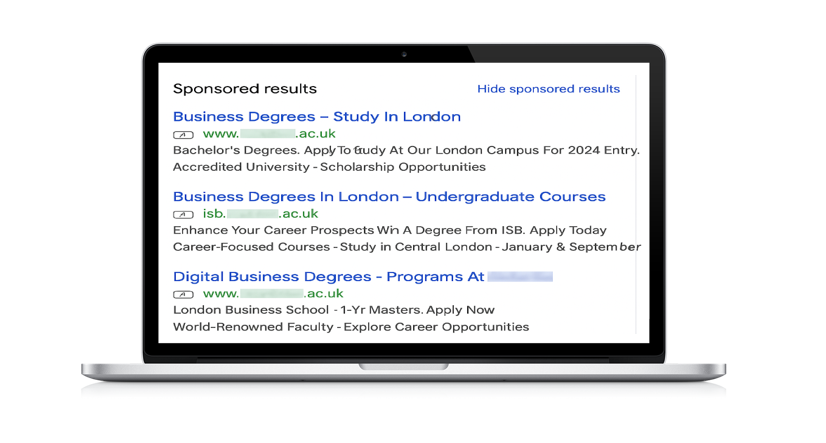
Now, Google has taken a different path. Instead of charging users to remove ads, it’s introducing a new “Sponsored results” label – rolling out globally – that groups ads more clearly at the top of search results and even lets users hide them altogether.
While Meta is monetising privacy, Google is opting for transparency. And both are redefining how advertisers connect with audiences.
Clarity, control, and changing behaviour
The new “Sponsored results” banner brings a cleaner, more transparent layout to paid search. Rather than blending ads into organic listings, Google now groups them under a clear heading, giving users a better sense of what’s paid and what’s not.
Crucially, users can now collapse or hide these ad blocks completely – a quiet but significant shift. For years, Google blurred the line between ads and organic content; now it’s giving users the power to decide whether they see them at all.
It may sound like a small design tweak, but it could change how people interact with paid search – rewarding genuinely useful, relevant campaigns and exposing low-quality ones.
Why it matters
For brands and universities that rely on paid search, every click now has to earn its place.
With clearer labelling and the option to hide ads, trust becomes essential. Ad messages will need to feel less like marketing and more like answers – timely, relevant, and aligned with user intent.
Generic, broad-match ads may see declining engagement, while high-intent campaigns like “Apply now for 2026 entry” or “Book your open day” should continue to perform well.
It’s a shift towards quality and context:
-
Headlines that match intent
-
Landing pages that deliver immediate value
-
Campaigns focused on decision moments, not broad awareness
The bigger picture: transparency meets AI
This update arrives alongside Google’s rollout of AI Overviews – AI-generated summaries that appear above both ads and organic results.
Together, they redefine what “visibility” means in search. Users now see AI answers first, followed by clearly labelled “Sponsored results” that can be hidden. Organic listings are being squeezed from both sides.
For marketers, that means rethinking how to earn visibility and trust. It’s no longer about simply ranking first or bidding higher – it’s about providing genuine value that users choose to engage with.
What it means for university marketers
For higher education, where searches are often exploratory (“best universities for business”, “how to apply through UCAS”), these changes could have real impact.
AI Overviews may answer early-stage questions without a click, while the clearer “Sponsored results” label could reduce engagement with paid listings unless they feel relevant and helpful.
Paid search isn’t dead – it just needs to work harder:
-
Focus on mid- and lower-funnel messaging
-
Lead with authenticity and usefulness
-
Test calls to action to see what cuts through
A more transparent, user-controlled Google means universities must diversify – with content, social, and owned channels building trust earlier in the journey.
Final thoughts
Meta is letting users pay to skip ads. Google is letting them choose to hide them for free.
Both are responding to the same trend – users wanting more control.
For advertisers, that’s not a threat; it’s a cue to raise the bar. In this new search landscape, visibility isn’t just about being seen – it’s about being chosen.
Want to understand what these changes mean for your digital strategy?
Get in touch with Kim.McLellan@hunterlodge.co.uk